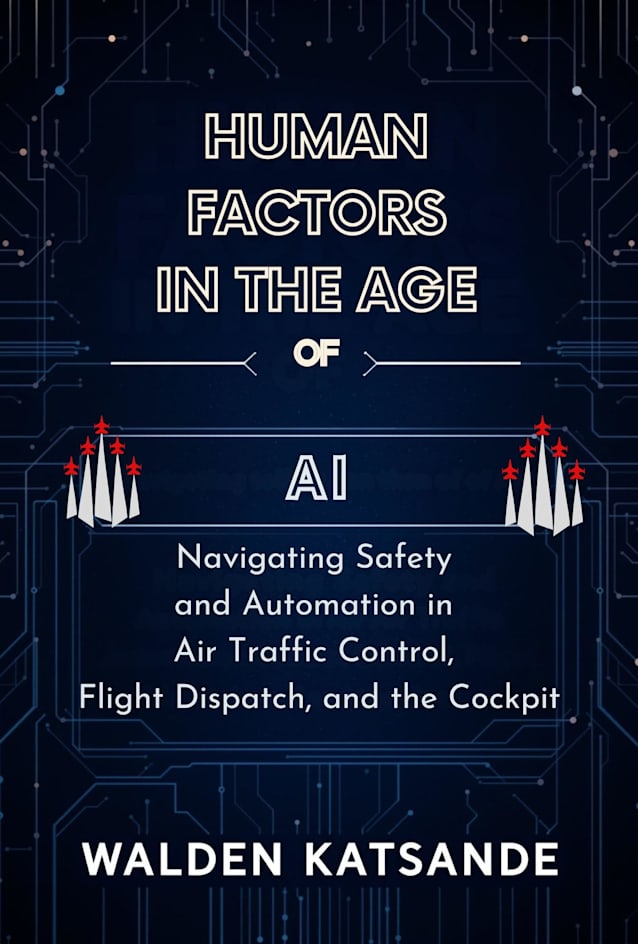
Human Factors in the Age of AI : Navigating Safety and Automation in Air Traffic Control, Flight Dispatch, and the Cockpit
About
ESSENTIAL READING FOR AVIATION PROFESSIONALS IN THE AI ERA
AI systems now make autonomous decisions in cockpits, control towers, and dispatch centers worldwide. But as the Boeing 737 MAX accidents proved, inadequate human-AI integration can transform technological progress into catastrophic failure. This book provides the frameworks aviation needs to get it right.
THE CRITICAL GAP IN AVIATION SAFETY
Traditional human factors frameworks, Crew Resource Management, the Dirty Dozen, Threat and Error Management, revolutionized safety but were developed when machines were passive tools. Today’s AI systems learn, adapt, and claim autonomous authority. Classical frameworks remain valuable but insufficient.
Human Factors in the Age of AI bridges this gap, reimagining foundational concepts for environments where humans and intelligent systems function as interdependent teammates.
COMPREHENSIVE COVERAGE FOR EVERY DOMAIN
AIR TRAFFIC CONTROL: Maintain situational awareness supervising AI conflict detection. Master Team Resource Management for human-AI collaboration. Develop override confidence and intervention protocols.
FLIGHT DECK: Calibrate trust in automation. Manage mode confusion and automation surprises. Preserve manual skills while leveraging AI. Exercise judgment when recommendations conflict with reality.
FLIGHT DISPATCH: Evaluate AI weather predictions and route optimization. Recognize algorithmic bias. Balance computational power with professional judgment.
SAFETY MANAGEMENT: Analyze human-AI failures using extended PEAR and TAEM frameworks. Design human-centered implementations. Build cultures supporting appropriate reliance.
15 EVIDENCE-BASED CHAPTERS:
• Reimagined SHELL/PEAR models incorporating AI elements
• AI-Era Dirty Dozen Plus Five: expanded error precursors
• Augmented decision-making: partnership or dependency?
• Adaptive situational awareness in dynamic systems
• Cognitive load management in supervisory roles
• Trust calibration: neither blind faith nor rejection
• Explainable AI and ethical transparency
• Threat-AI Error Management (TAEM) frameworks
• Decision biases: human and algorithmic
• Ergonomic principles for AI interfaces
• Crisis training for human-AI teaming
• Automation surprise countermeasures
• Human oversight in autonomous systems
• Future-proofing for evolving capabilities
• Lifelong learning ecosystems
WHO BENEFITS
Safety professionals analyzing AI integration • Controllers supervising automated systems • Pilots managing automation • Dispatchers leveraging AI support • Regulators developing standards • Developers designing human-centered AI • Researchers studying interaction • Educators teaching modern human factors
WHY THIS MATTERS NOW
Aviation’s safety record emerged from learning, improvement, and human-centered design. As AI gains authority over critical functions, maintaining that record requires intentional integration guided by robust principles.
The future will be collaborative, humans and AI combining strengths. This book provides frameworks, evidence, and guidance to ensure collaboration enhances rather than undermines safety.
YOUR PROFESSIONAL INVESTMENT
Whether pursuing certification, supporting training, or building expertise in emerging technologies, this textbook provides comprehensive foundations you need.
Technology serves humanity best when designed with deep understanding of human strengths and limitations. Human Factors in the Age of AI delivers that understanding.
Order today and equip yourself for aviation’s most profound transformation since the jet age.